Why We Think: The Essential Case for Effortful Reflection
Key Takeaways
- Thinking is an evolved survival tool that now allows for meaning-making.
- We must distinguish between automatic reaction and effortful reflection.
- Modern convenience risks “outsourcing” our thoughts, removing the friction necessary for true learning.
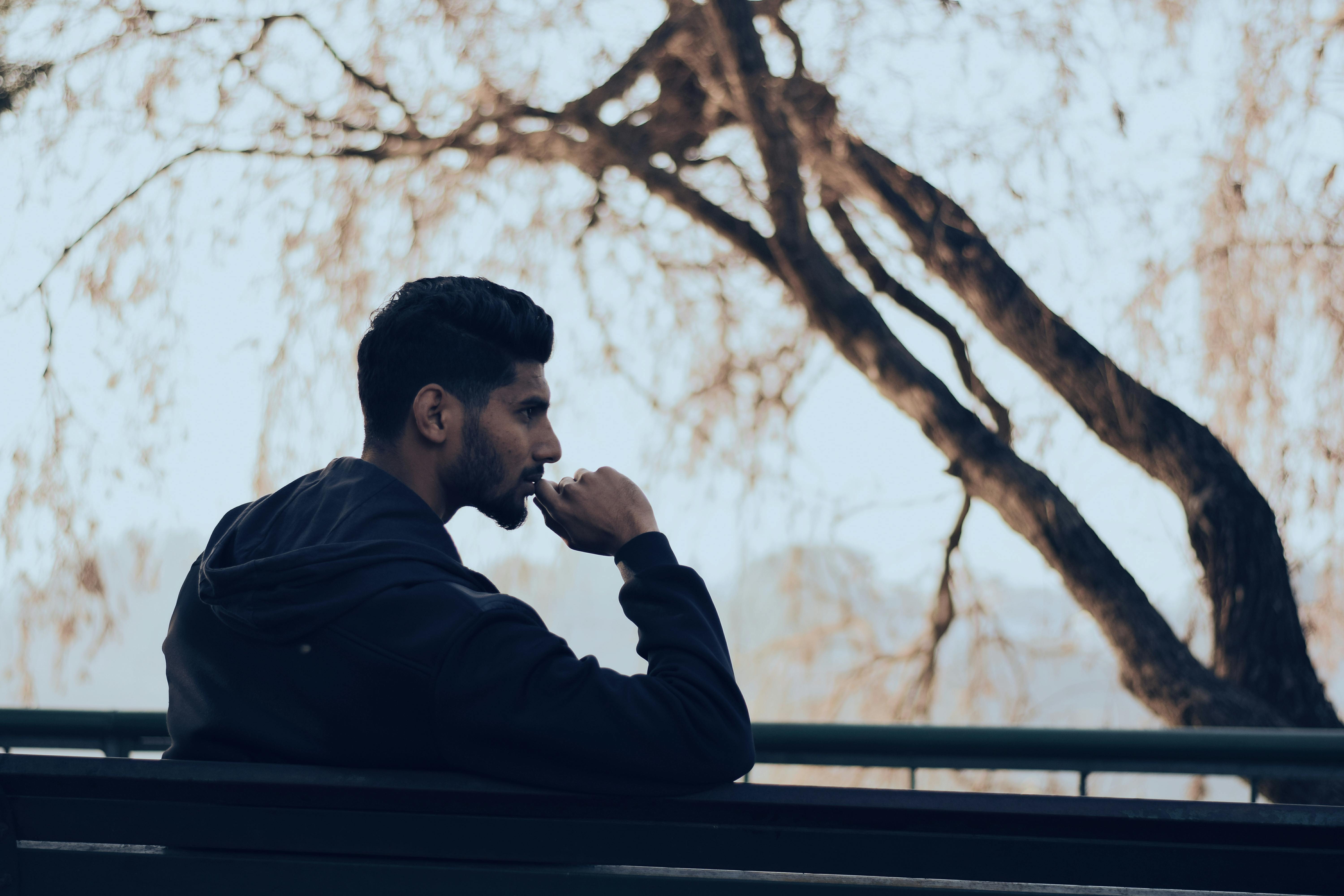
There is a moment, somewhere between waking and the first glance at a phone screen, when the mind is briefly its own. No notifications. No agenda. Just a few seconds of quiet, undirected thought: a fragment of a dream still dissolving, a question forming about the day ahead, a memory surfacing for no reason at all.
Most of us hurry past that moment. But it might be the most important part of the day.
This blog is called Call to Think. Before writing anything else here, I want to sit with that phrase. Not as a slogan, but as a genuine question: why do we think at all?
Humans think to predict what may happen, choose between possible actions, learn from experience, and create meaning. But much of what feels like thinking is automatic reaction; critical thinking begins when we slow down, inspect that reaction, and deliberately reflect.
Why Do Humans Think?
What mental machinery did we inherit for thinking? Thinking, in the oldest sense, is a survival tool. Our ancestors didn’t think because it was noble or virtuous. They thought because the ones who didn’t got eaten. The brain evolved to model the world, anticipate threats, recognize patterns in rustling grass and changing seasons, and simulate futures before committing to action.
That’s extraordinary. Every act of imagination (every time you picture how a conversation might go, or mentally rehearse a route before driving it) is an echo of that ancient machinery running in a modern context.
But somewhere along the way, thinking became more than survival. It became the thing we do with the extra time that survival affords. We think about what is beautiful and what is just. We think about why we’re here. We argue about ideas with no practical consequence whatsoever, and somehow that feels important.
Thinking became how we make meaning.
What Is the Difference Between Reacting and Reflecting?
Not all thinking is the same. There’s the fast, automatic kind (Daniel Kahneman called it System 1) that processes faces, reads danger, completes familiar patterns. This is thinking as reflex: quick, efficient, often right, occasionally catastrophically wrong.
Then there’s the slower kind. The kind that pauses. That asks is this actually true? or what am I missing? or why does this bother me so much? This is thinking as an act of will: effortful, uncomfortable, and indispensable.
The gap between the two is where most of the real damage and most of the real progress happens. Reacting is how we form first impressions, fall for misinformation, repeat old patterns, and mistake familiarity for truth. Reflecting is how we revise, reconsider, grow.
We are, by default, reactors. Becoming a thinker, in the full sense, requires something close to practice. A systematic method for questioning assumptions is what I explore next: the difference between reacting and reflecting, turned into a repeatable discipline.
What Do We Risk When We Outsource Thinking?
The risk is straightforward: outsourcing our thinking removes the friction and uncertainty that make real understanding possible, letting us arrive at answers without ever having had a thought.
We live in an age that is very good at filling the space that reflection needs.
Every idle moment is a monetized surface. Every question has an instant answer. Every opinion has a community to validate it before you’ve finished forming it. And now, for the first time, the labor of thinking itself (the drafting, reasoning, synthesizing, explaining) can be delegated to a machine.
I don’t say this as a complaint. I work with these tools. I find them useful. But I notice something: when I use them unreflectively, when I reach for an AI answer before I’ve sat with a question, I arrive at a response without ever having had a thought. The output might be correct. But something is missing.
What’s missing is the friction. The uncertainty. The moment where I didn’t know something and had to hold that not-knowing long enough for my own understanding to form.
That friction isn’t a bug in thinking. It’s the mechanism by which we actually learn anything.
I return to this question from different angles elsewhere: what’s actually left for us when AI does everything, and what a guru was for now that any answer is a prompt away.
Does AI Make Us Think Less?
Not inevitably, but it can under unreflective use. Correlational research linking heavy AI use to lower critical-thinking scores points to “cognitive offloading”: the same mechanism by which any tool, from calculators to search engines, lets a skill atrophy when it’s no longer exercised. AI is a more powerful version of that same offload, because it can now do the drafting and reasoning, not just the lookup.
The tool itself isn’t the deciding factor. Used as a shortcut around a question, AI removes the friction that produces understanding. Used to go deeper into a question you’ve already sat with, it can extend reflection rather than replace it. I go further into that evidence, and what it implies for effortful reflection, in what Dr. Kalam might ask AI today.
Worth naming a constraint that sits underneath all of this: the effortful mode is not always available on demand. It runs on biological hardware with maintenance requirements, and it is the first thing sleep deprivation takes away, leaving the automatic mode running unsupervised, which from the inside feels indistinguishable from thinking clearly.
That distinction matters more once you notice that thinking, in an AI system, doesn’t live where you’d assume. I explore where AI intelligence actually lives, and what a model that helped disprove a 150-year-old conjecture reveals about the difference between generating an answer and understanding one. Underneath both sits a prior question this distinction depends on: whether thinking and inference are the same thing at all, and if not, which of the differences between them are actually permanent.
What Is the Call to Think?
Call to Think is my attempt to practice what I’m describing.
The essays here will be about technology, AI, society, and the ideas underneath them. But the method matters as much as the subject. The goal isn’t to have opinions faster. It’s to think more carefully, in public, about things that are genuinely hard.
I expect to be wrong about things. I expect to change my mind. I want to be the kind of writer, and the kind of thinker, who treats both of those as features, not failures.
There’s an old philosophical tradition (thinking from first principles) of asking the simplest possible questions as seriously as possible. Why is there something rather than nothing? What do we owe each other? What is a good life?
These questions have no final answers. But the act of asking them, slowly, rigorously, with an open hand, is itself a kind of answer. It’s the answer that says: I was here. I paid attention. I tried to understand.
That feels worth doing.
So: why do we think?
Maybe because thinking is the one thing we can do that is entirely, irreducibly ours. Not the conclusions: those can be right or wrong, borrowed or original. But the act itself. The sitting-with. The following-a-thread. The willingness to not know something for a while and see what emerges.
In a world that rewards speed, that’s almost a radical act.
Everything else I write here about the mechanics of critical thinking, how doubt is structured, what reflection costs, why the conditions for it are easier to lose than to notice losing, starts from that act.
Let’s begin.
More essays at Call to Think · About this project
Frequently Asked Questions
Why do we think at all?
Thinking evolved as a survival tool to model the world and anticipate threats, but it has since become the primary way we make meaning and explore abstract concepts like justice and beauty.
What is the difference between reacting and reflecting?
Reacting is fast, automatic 'System 1' thinking, while reflecting is slower, effortful 'System 2' thinking that requires active will to pause and reconsider truths.
What are the risks of outsourcing thinking to AI?
Outsourcing thinking risks removing the necessary friction and uncertainty that lead to true understanding and learning, potentially arriving at answers without ever having had a thought.